The photovoltaic industry has steadily moved from 1000 V DC to 1500 V DC system architectures. The shift improves efficiency and reduces balance-of-system cost, but it also raises the demands on overcurrent protection in every string and combiner box.
1. Why Higher Voltage Changes Fuse Requirements
At 1500 V DC, an arc is harder to extinguish than at 1000 V because there is no natural current zero crossing in a DC circuit. A fuse applied in a 1500 V array must be rated for that voltage and proven to interrupt the available fault current at it — a 1000 V rating is not interchangeable.
2. String Fuses and Reverse Current
String fuses protect modules and wiring against fault currents fed from other parallel strings. Designers must consider not only normal operating current but also reverse-current conditions and the maximum fault current the array can deliver into a failed string.
3. Breaking Capacity at the Combiner
The prospective short-circuit current at a combiner box can be significant when many strings are paralleled. The selected fuse must have a DC breaking capacity at the system voltage that exceeds this available fault current, verified against the manufacturer's published data.
4. Coordination and Documentation
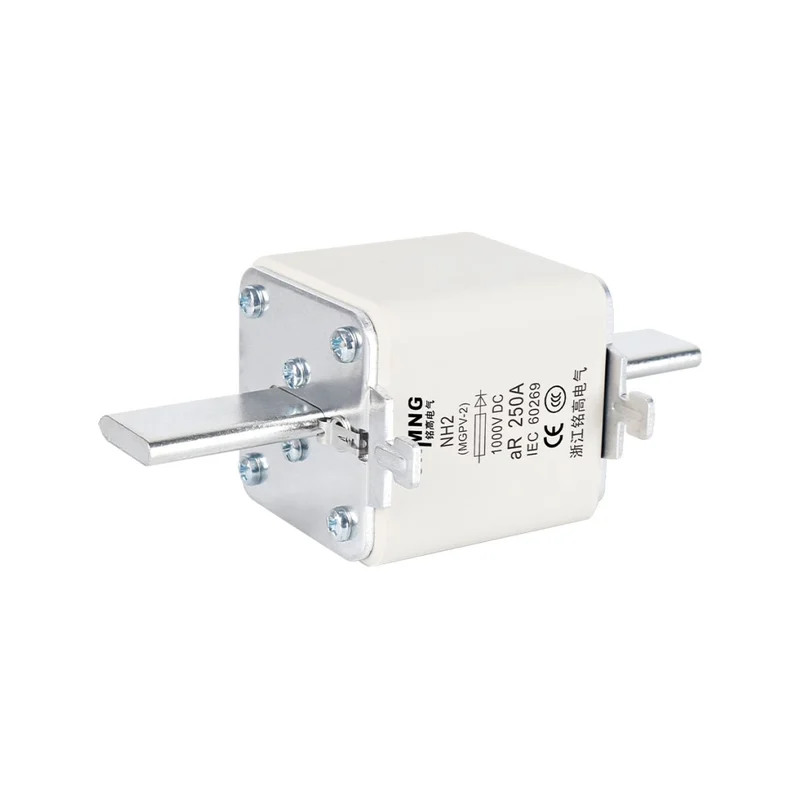
With higher system voltages, coordination between the string fuse, the combiner and downstream devices becomes more important. Always confirm the exact model's ratings in the current technical documentation before specifying. Minggao's photovoltaic fuse links are designed for DC string protection up to 1500 V; our team can help review the requirements of a given array design.