High-speed fuses protect semiconductors — devices that can be damaged by even brief overcurrents. Within this family, the aR and gR designations describe two different operating classes, and choosing between them matters.
1. What the Designations Mean
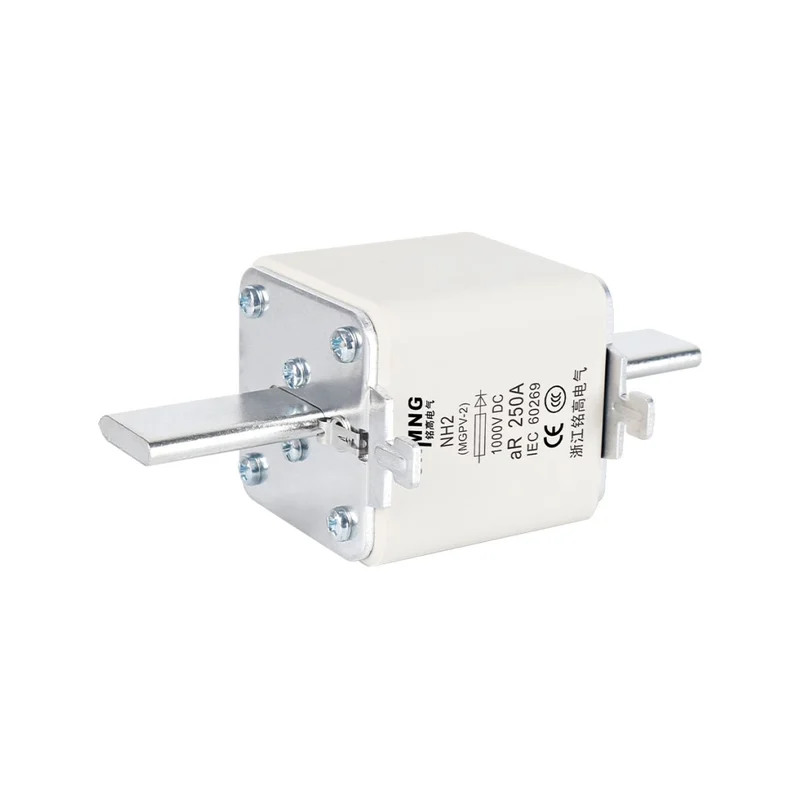
An aR fuse is a partial-range fuse intended for short-circuit protection only; it is not designed to carry overload currents continuously. A gR fuse is a full-range fuse that provides both overload and short-circuit protection. The correct choice depends on the protection strategy and what other devices handle overloads.
2. Let-Through Energy Is the Key Metric
For semiconductor protection, the decisive parameter is the fuse's I²t let-through energy during a fault. It must be lower than the withstand capability of the protected device. Peak current limiting is equally important in practical designs.
3. Application Context
Where a separate overload device is present, an aR fuse may be sufficient and economical. Where a single device must handle both overload and short-circuit duties, a gR fuse is appropriate. The circuit topology and coordination study determine the answer.
4. Confirm Against the Data Sheet
Always verify I²t values, voltage ratings and time-current characteristics in the current technical documentation for the exact model. Minggao's high-speed fuse range covers aR and gR types for power electronic applications, and our engineers can assist with the selection review.