Battery energy storage systems are being deployed at record scale alongside solar and wind. Unlike a utility grid, a battery bank is a high-energy DC source capable of delivering very large fault currents — a reality that reshapes how protection must be designed.
1. High Fault Currents From a DC Source
A battery can deliver fault current far above its rated discharge current. The prospective short-circuit current at a rack or DC bus must be established from system design data and compared with the fuse's rated DC breaking capacity at the relevant voltage.
2. Selectivity Across Many Racks
In a multi-rack installation, an unwanted outage of an entire bank is costly. Selectivity — clearing only the faulty branch — depends on coordinating the let-through energy of each fuse with downstream devices and the withstand limits of protected components.
3. Cycling, Inrush and Thermal Stress
Storage systems operate in cycles rather than at steady load. Inrush currents, regenerative events and enclosure temperature all affect fuse loading. Published derating guidance and the real duty profile should inform the chosen rating.
4. Verification Remains Essential
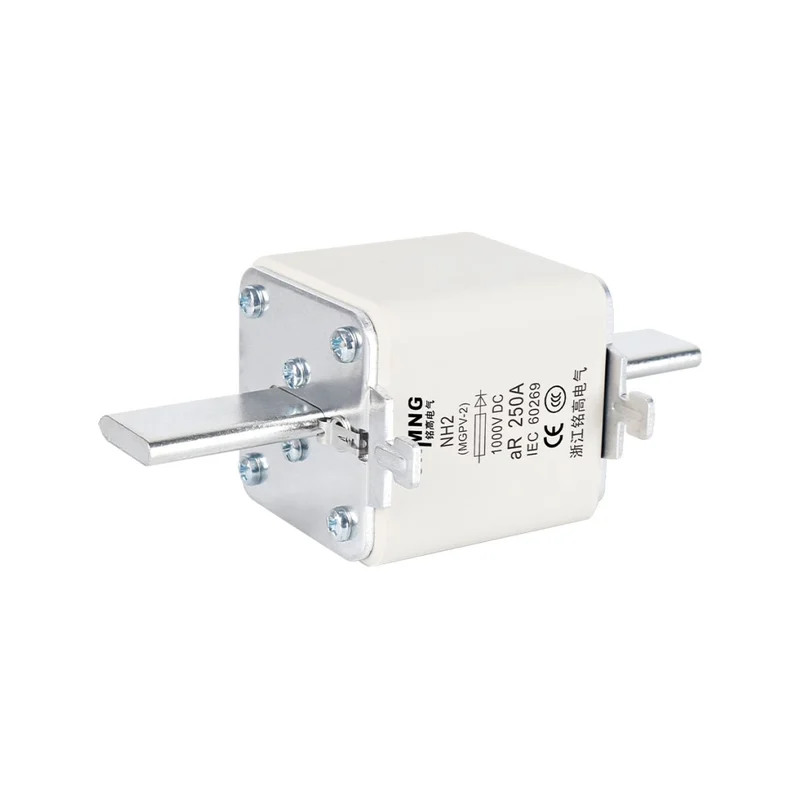
These trends make selection more demanding, not less. Final choices must be checked against current model-specific documentation and approved by the responsible system designer. Minggao's energy storage fuse range targets DC protection in battery racks and DC bus circuits, and our engineers can help review voltage, fault current and coordination.